Social Media Strategy · Content Strategy · Growth
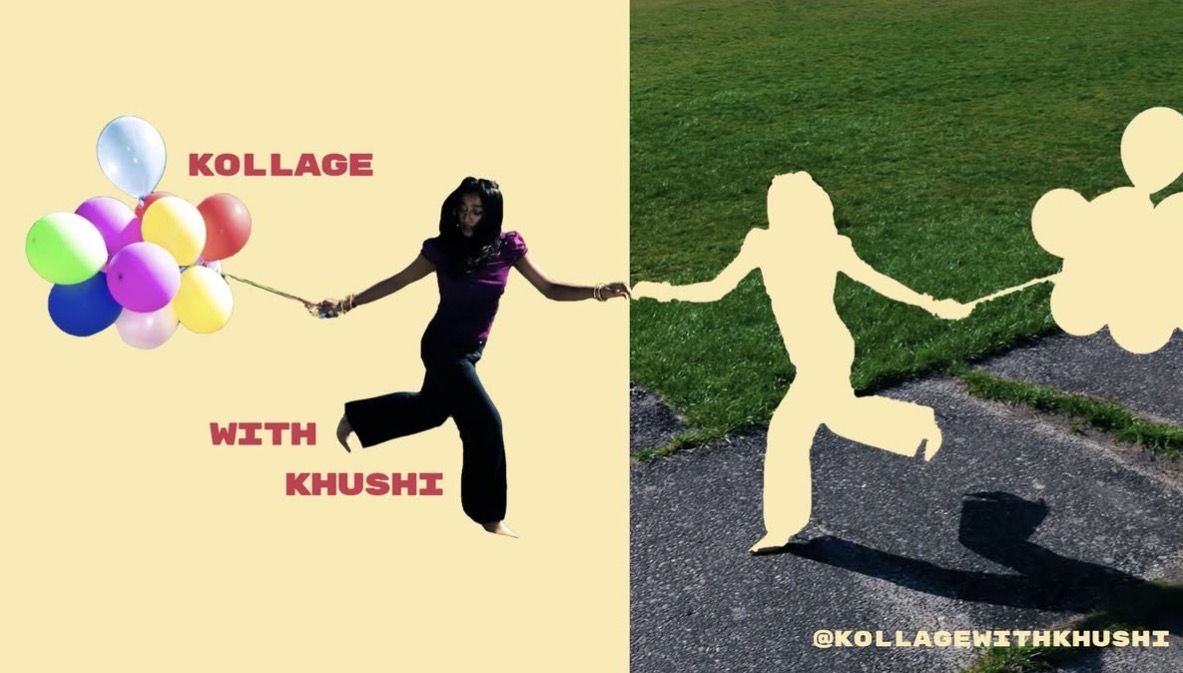
Kollage with Khushi
(brief)
Turning long-form artist conversations into a repeatable social content system.
Case study
The Challenge
The content was good. The audience wasn’t seeing the best of it.
Kollage with Khushi had a distinctive idea: artists making collages while having long, personal conversations.
The problem wasn’t a lack of interesting material. The most compelling opinions, reactions, and stories were often buried inside long-form interviews. For a growing channel without an established audience, viewers had little reason to wait for those moments.
How could I turn hours of conversation into a content system built for discovery—and use data to decide what deserved attention?
Finding the Signal
I started by looking for where attention was being lost.
Before recommending more content, I analyzed existing Instagram and YouTube performance and studied comparable interview and personality-led formats.
The first pattern was simple: viewers responded more strongly when content began with a question, opinion, reaction, or point of tension rather than a traditional introduction.
The issue wasn't only what we posted. It was where we started the story.
From Long-Form to Short-Form
I stopped treating the interview as a timeline.
I began reviewing full interviews with a different question:
What is the moment someone would care about before they know who this person is?
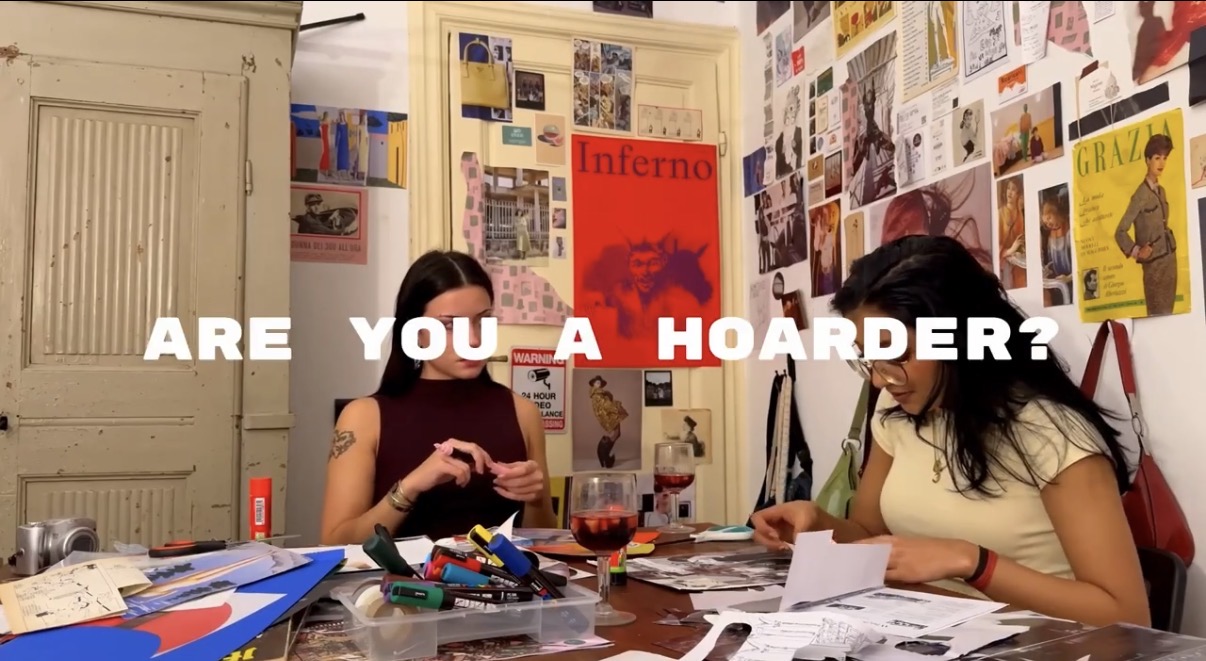
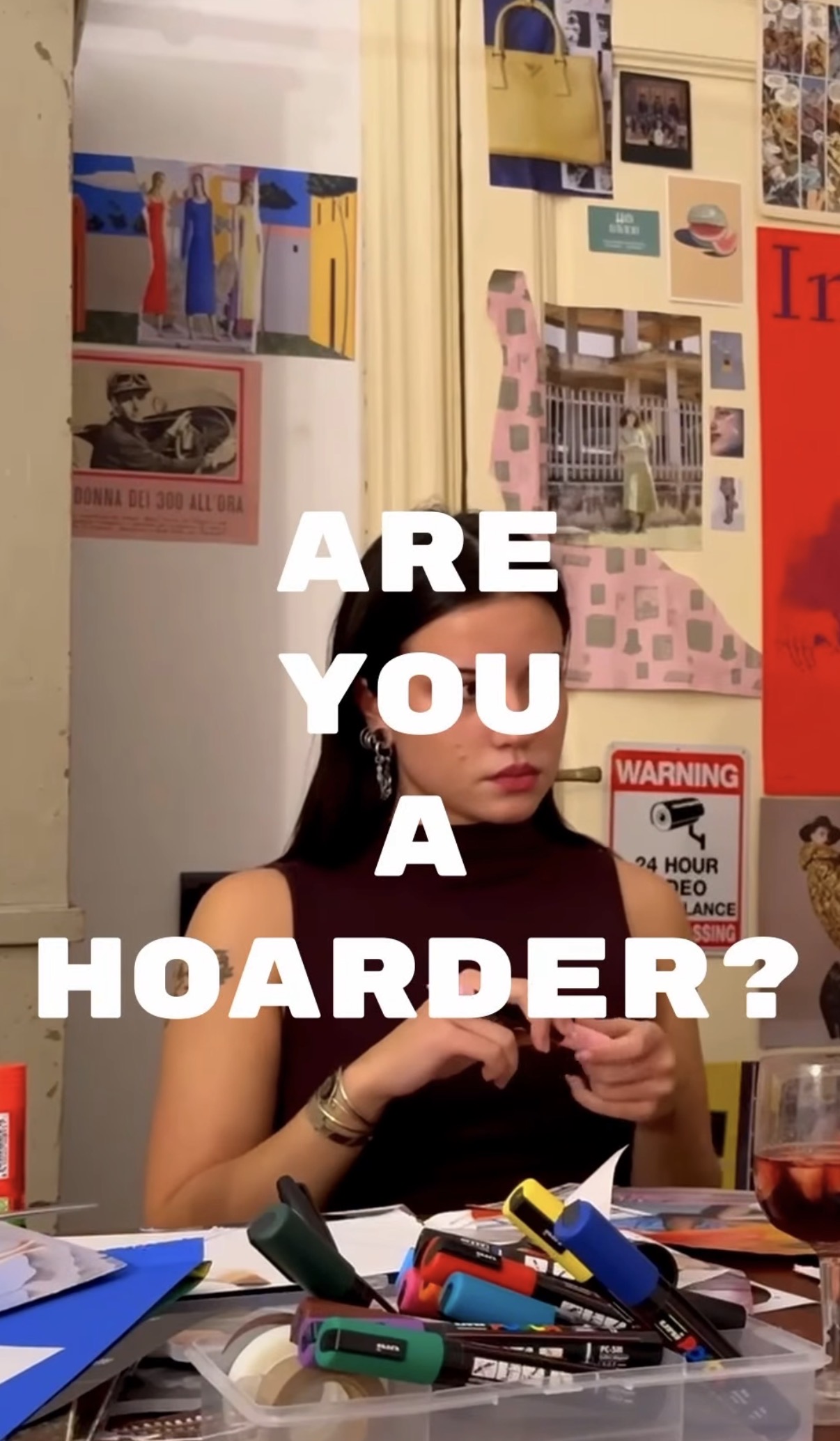
I identified opinions, reactions, unexpected exchanges, and moments that could stand on their own, then translated those selections into editing direction for the creator’s editor.
My Decision
Why this moment?
- Immediate question
- Natural reaction
- Works without biography
My role — Moment selection + editing direction
Building the System
One good Reel wasn’t the strategy.
Finding a stronger moment could improve one post. I needed a system that could work for the next interview too.
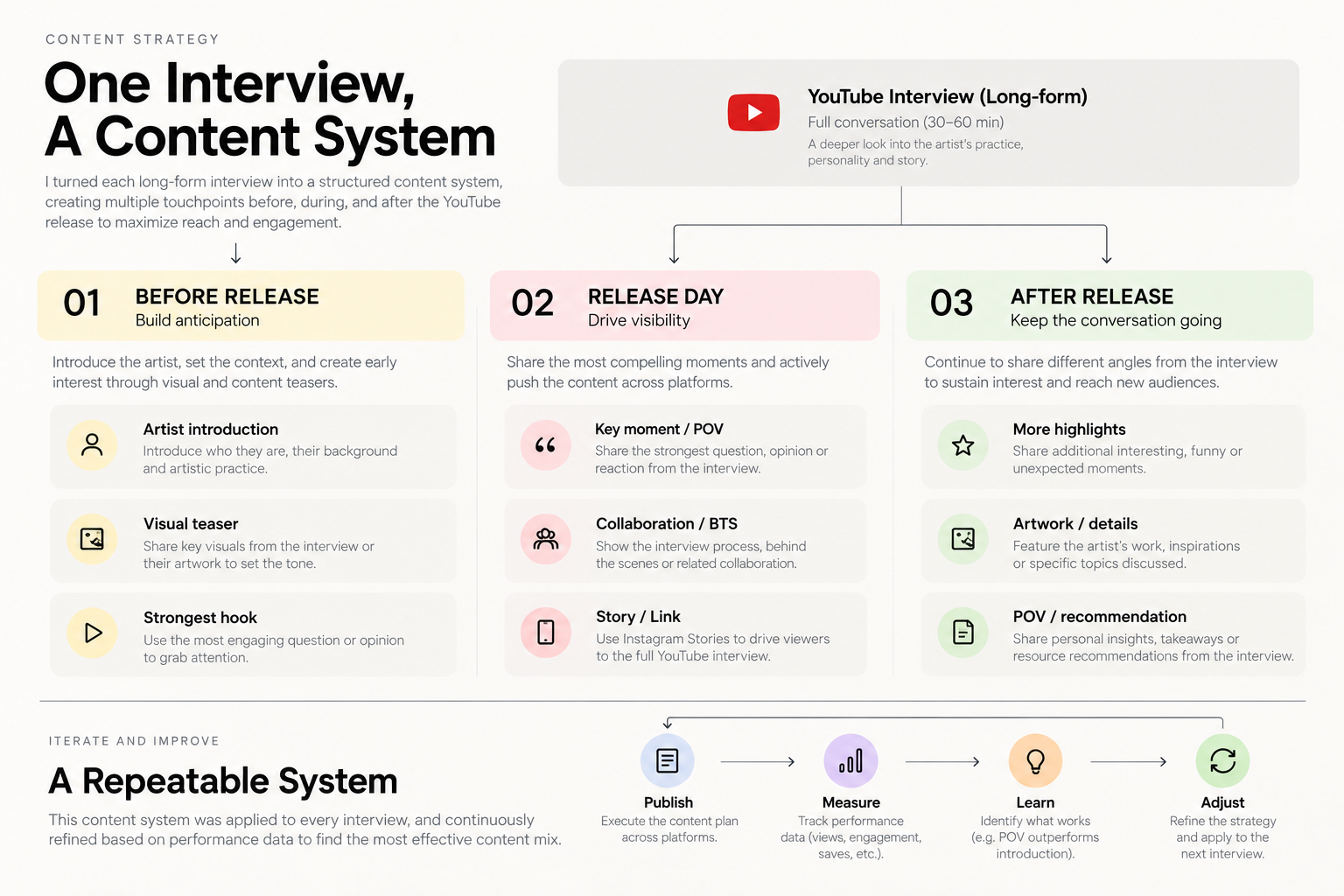
Different pieces had different jobs.
Performance
Then the data started answering back.
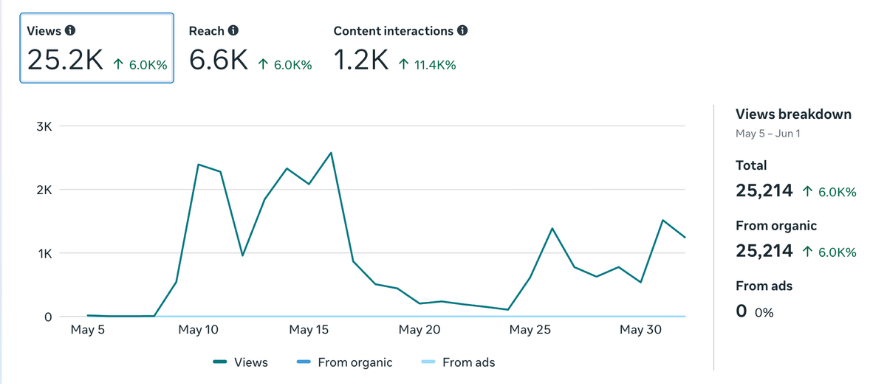
As the system was implemented, I tracked performance to understand what was actually driving discovery and engagement—and used those patterns to shape what came next.
What the Data Changed
The numbers mattered less than the patterns behind them.
~1.2K views
Hoony — POV
~890 views
Hoony — Self-introduction
POV- and perspective-led content repeatedly performed strongly across later interviews.
Lead with perspective, not biography.8 saves
“3 Minimalist Inspirations”
Recommendation/resource-oriented content did not always generate the highest views, but it generated stronger save behavior.
The highest-viewed content and the most useful content were not always the same thing.85.3%
of views came from non-followers
Artist collaboration posts helped content reach audiences beyond the existing follower base.
Distribution mattered alongside content selection.Building a Feedback Loop
I needed a way to keep learning.
Once different formats began producing different audience behaviors, I built a tracking system that connected content decisions with performance.
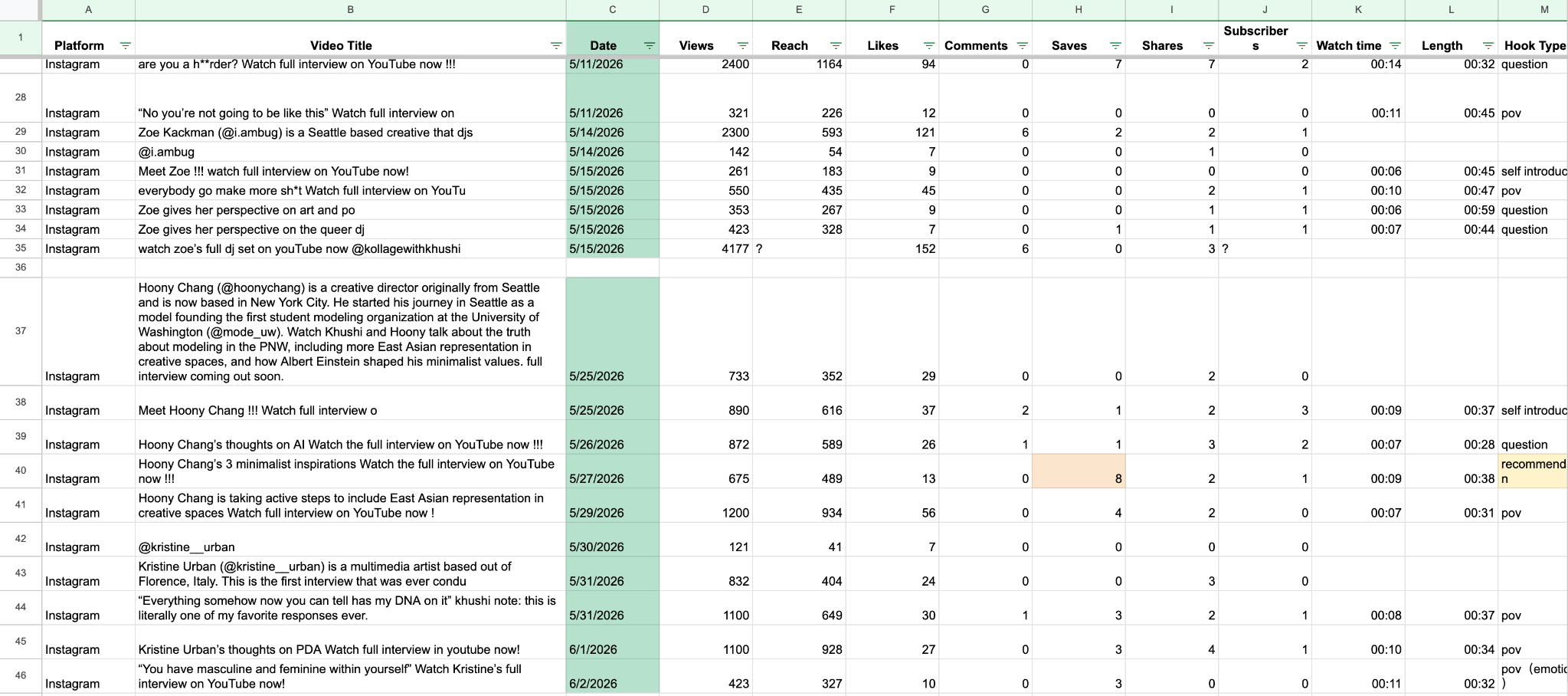
I wasn't tracking performance just to report it.
I was using it to decide what to make next.
The creator continued using the tracker after the initial strategy work, turning one-time recommendations into an ongoing optimization process.
My Role
I independently led the strategy and analysis behind the project—from auditing performance and studying comparable formats to selecting short-form moments, developing editing direction, building the distribution framework, and tracking what happened after publication.
Social Media Strategy · Content Strategy · Editorial Direction · Performance Analysis · Growth Strategy
Reflection
The content wasn't missing. It was buried.
This project taught me to treat content strategy as a cycle: find the signal, make a decision, measure what happens, and let the next decision get smarter.