Marketing Strategy · Brand Activation · Community
BRICK
(brief)
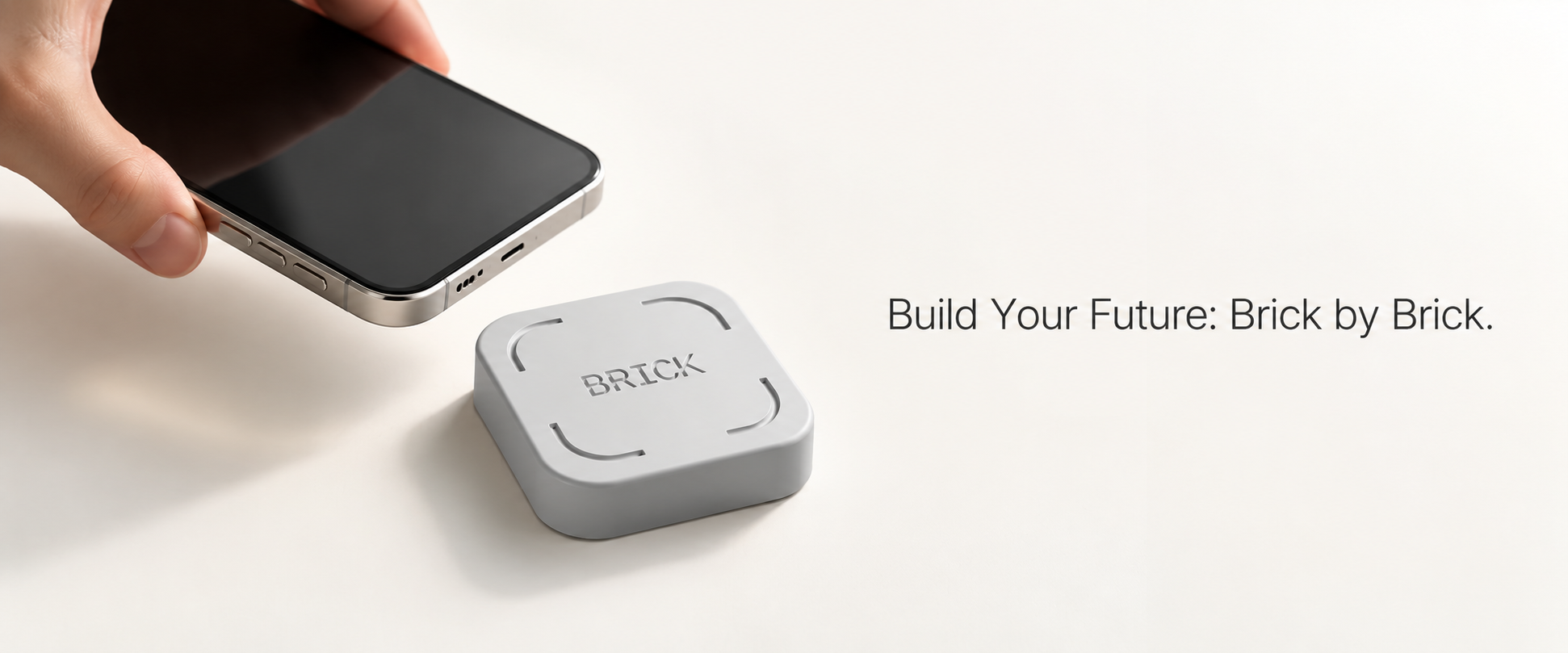
BRICK is a proposed marketing strategy and brand activation framework designed to turn focus from a product feature into a shared lifestyle.
Case study
The Challenge
BRICK creates physical friction between users and their phones, helping them step away from distracting apps and protect time for focused work.
But the larger marketing challenge was not simply explaining what the product did.
Digital wellbeing is a crowded space. Similar behaviors can be supported by competing products and even by built-in screen-time controls on smartphones. That meant functional utility alone would not create a strong reason for people to choose BRICK, continue using it, or identify with the brand.
The strategic question became:
How could BRICK move beyond a functional productivity tool and become a lifestyle people wanted to join?
From Audience to Opportunity
Our team’s audience and market analysis established the foundation for the campaign.
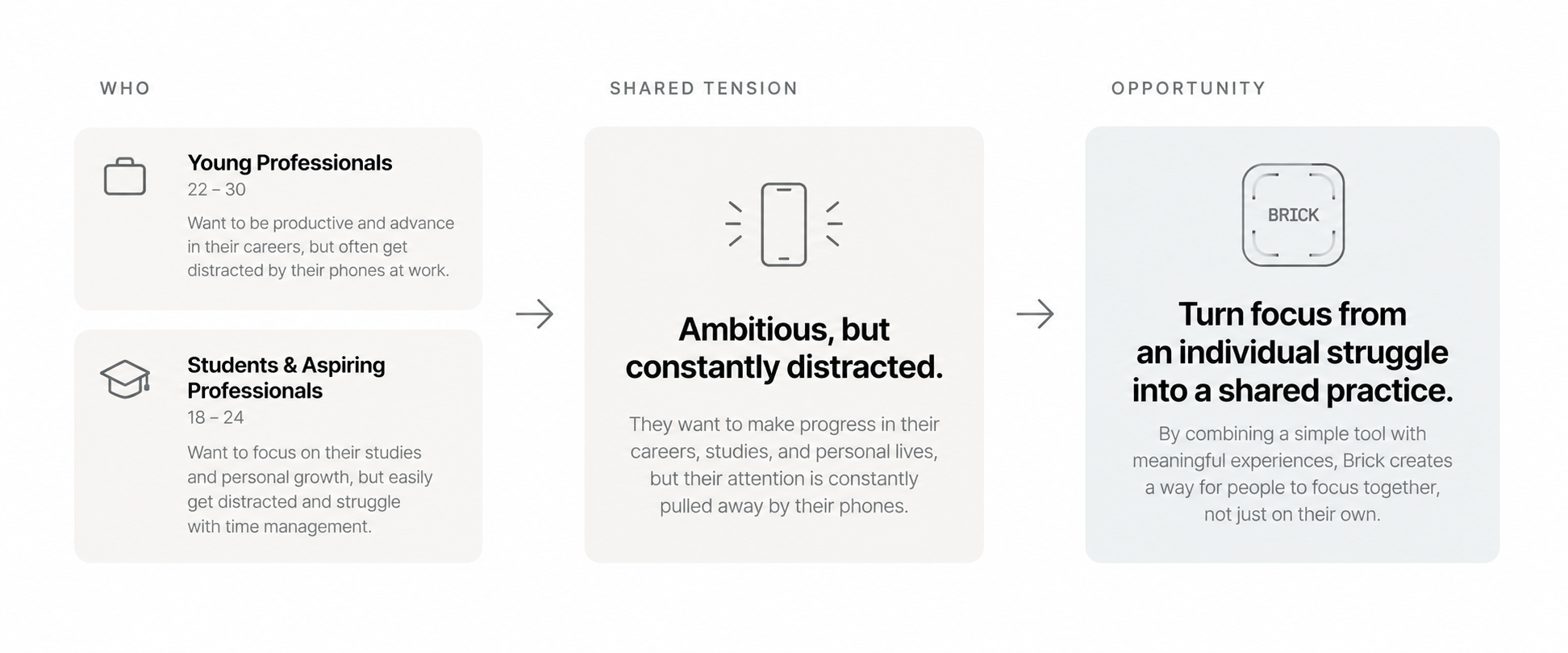
Two groups stood out: young professionals trying to protect their attention at work, and students or aspiring professionals balancing academic performance, personal growth, and constant digital distraction.
Although their contexts differed, they shared the same tension:
They were ambitious, but their attention was constantly being pulled away.
That suggested an opportunity beyond simply telling people to use their phones less. BRICK could position focus as something connected to progress, self-discipline, and the person users wanted to become.
Building One Campaign Journey
My primary responsibility began after the target-audience foundation was established.
I led the development of the campaign strategy, initially exploring several separate activation ideas. The problem was that individually they felt disconnected.
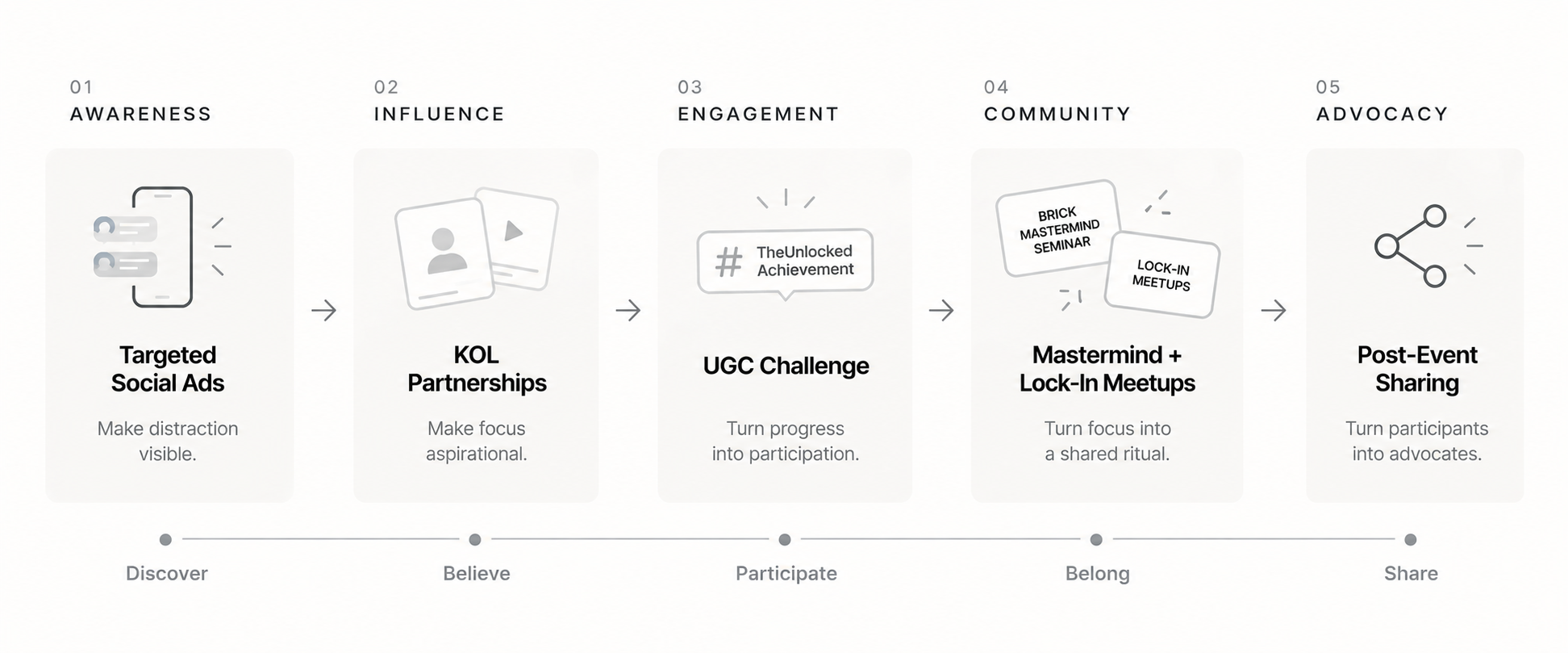
Instead of treating social advertising, creators, participation, events, and community as separate tactics, I reorganized them into one journey:
Awareness -> Influence -> Engagement -> Community -> Advocacy
Each stage had a different job.
Awareness made the distraction problem visible.
Influence connected focus with people and ideas the audience already aspired toward.
Engagement gave users a reason to participate rather than simply observe.
Community turned an individual productivity behavior into a shared experience.
Advocacy extended that experience beyond the activation itself.
Making Focus Aspirational
The strategy was built around a simple observation: people rarely want productivity only for the sake of being productive.
They want what greater focus might enable: better work, deeper knowledge, career progress, creative output, or a stronger sense of control over their time.
That shaped the creator strategy.
Rather than choosing influencers only for reach, I proposed working with creators, authors, podcasters, and professionals whose public identities already represented knowledge, self-direction, and meaningful work.
The goal was to connect BRICK with an aspirational identity:
not simply "I use less social media," but "I am intentional about where my attention goes."
Turning the Product Into an Experience
That thinking led to the BRICK Mastermind concept: a distraction-free seminar built around the same behavior the product was designed to encourage.
Participants would put their phones away before entering a space centered on learning, focused conversation, and offline networking.
Invited speakers would come from fields already relevant to BRICK’s audience: professional growth, creativity, deep work, entrepreneurship, and knowledge-building.
The point was not simply to promote BRICK inside an event.
The event itself would demonstrate the product promise.
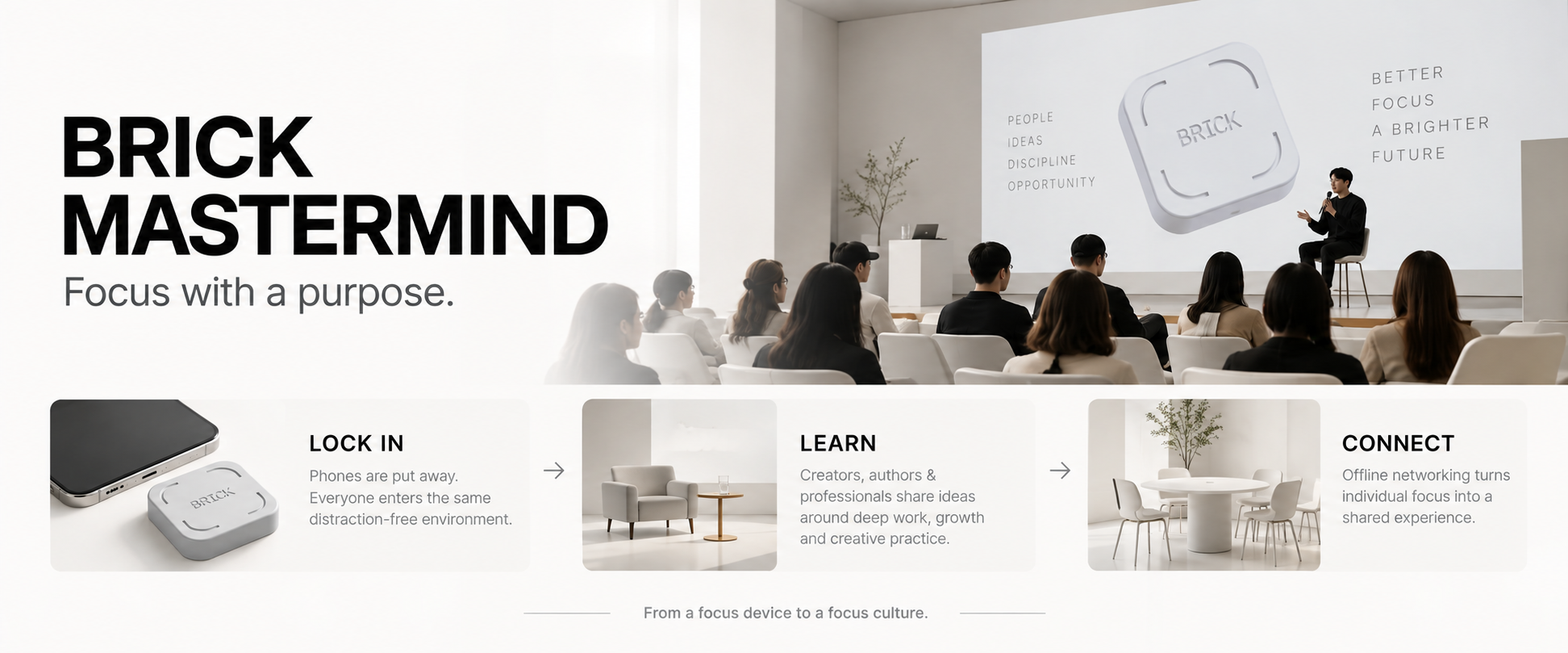
From a focus device to a focus culture.
Making Focus Social
The Mastermind concept addressed aspiration, but I also wanted the strategy to respond to a more ordinary problem: knowing that you should focus does not necessarily make focusing easy.
That idea came partly from my own relationship with digital distraction. For someone who struggles with self-control, another productivity feature may not be enough. Environment and social accountability can be more powerful.
I therefore proposed smaller BRICK Lock-In Meetups that could happen repeatedly in cafes, workspaces, or other community settings.
Everyone would enter the same phone-free environment and work alongside others doing the same thing.
Instead of asking each person to resist distraction alone, the environment would make focused behavior feel normal.
Designing for Retention, Not Just Acquisition
The strategy also needed to answer what happened after someone bought BRICK.
A productivity device can lose its novelty quickly. If the campaign focused only on acquisition, users could try the product for a short period and gradually stop using it.
I therefore incorporated repeat participation, focus milestones, community meetups, and user-generated challenges into the strategy.
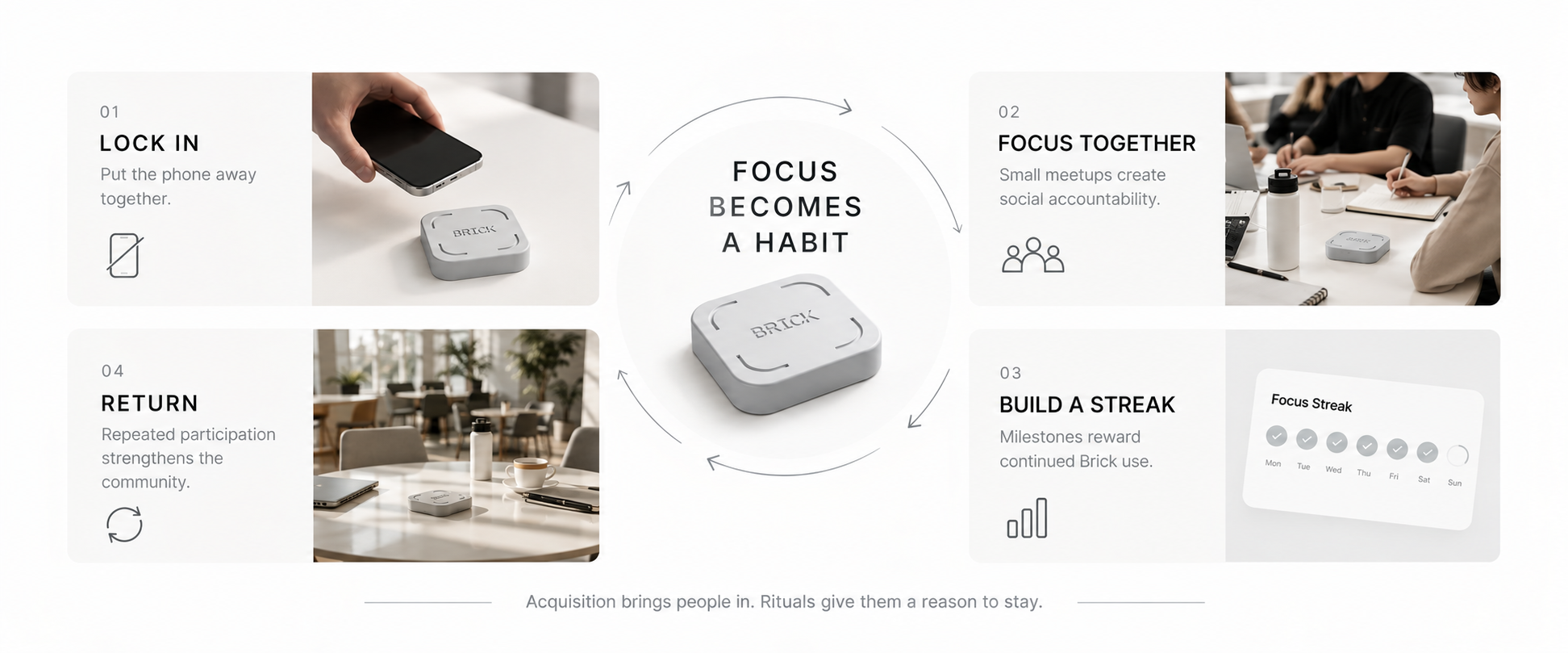
Milestones such as accumulated focus time could give users a reason to return, while recurring Lock-In Meetups could turn product use into a recognizable ritual.
The objective was to create a reinforcing loop:
Lock in -> Focus together -> Build a streak -> Return
From Product to Lifestyle
Across the campaign, the goal was to make BRICK represent more than restriction.
The product removes access to distraction, but the brand opportunity was to emphasize what users gain in return: attention, progress, real-world connection, and time directed toward something meaningful.
That shifted the campaign from a purely functional message toward a lifestyle proposition.
The strategy was not just about selling a device that blocks distractions.
It was about making focus aspirational, social, and repeatable.
My Role
Campaign Strategy · Brand Activation · Community Marketing · Event Concept Development
This was a collaborative strategy project. The team developed the initial market, competitor, and target-audience foundation together.
My primary responsibility was the campaign strategy that followed.
I developed the phased campaign journey from awareness through community and advocacy, including the social advertising direction, creator strategy, participation mechanics, BRICK Mastermind concept, Lock-In Meetups, and retention-oriented milestone system.
A major part of my process was connecting these ideas into one coherent system rather than presenting them as isolated marketing tactics.
Reflection
The strongest shift in my thinking was moving from product marketing to behavior and identity.
BRICK already had a clear functional proposition: create friction between people and distracting apps. But functionality alone was easy to imitate.
The more interesting opportunity was to design a reason for people to keep participating.
That meant thinking beyond awareness and asking how marketing could shape aspiration, environment, social accountability, and habit.
The final strategy therefore treated the product, campaign, event, and community as parts of the same experience.