Documentary · Cinematography · Editorial
Alone While Not Alone
(brief)
Alone While Not Alone follows two international students living alone in Seattle with their cats. Through parallel routines and contrasting perspectives, the film explores how pet companionship reshapes loneliness, intimacy, and dependence.
Case study
Overview
Alone While Not Alone follows two international students living alone in Seattle with their cats. Through parallel routines and contrasting perspectives, the film explores how pet companionship reshapes loneliness, intimacy, and dependence.
Team: Yangchen Fu · Monica Wang · Eddie Liu
Location: Seattle, WA
From One Story to Two
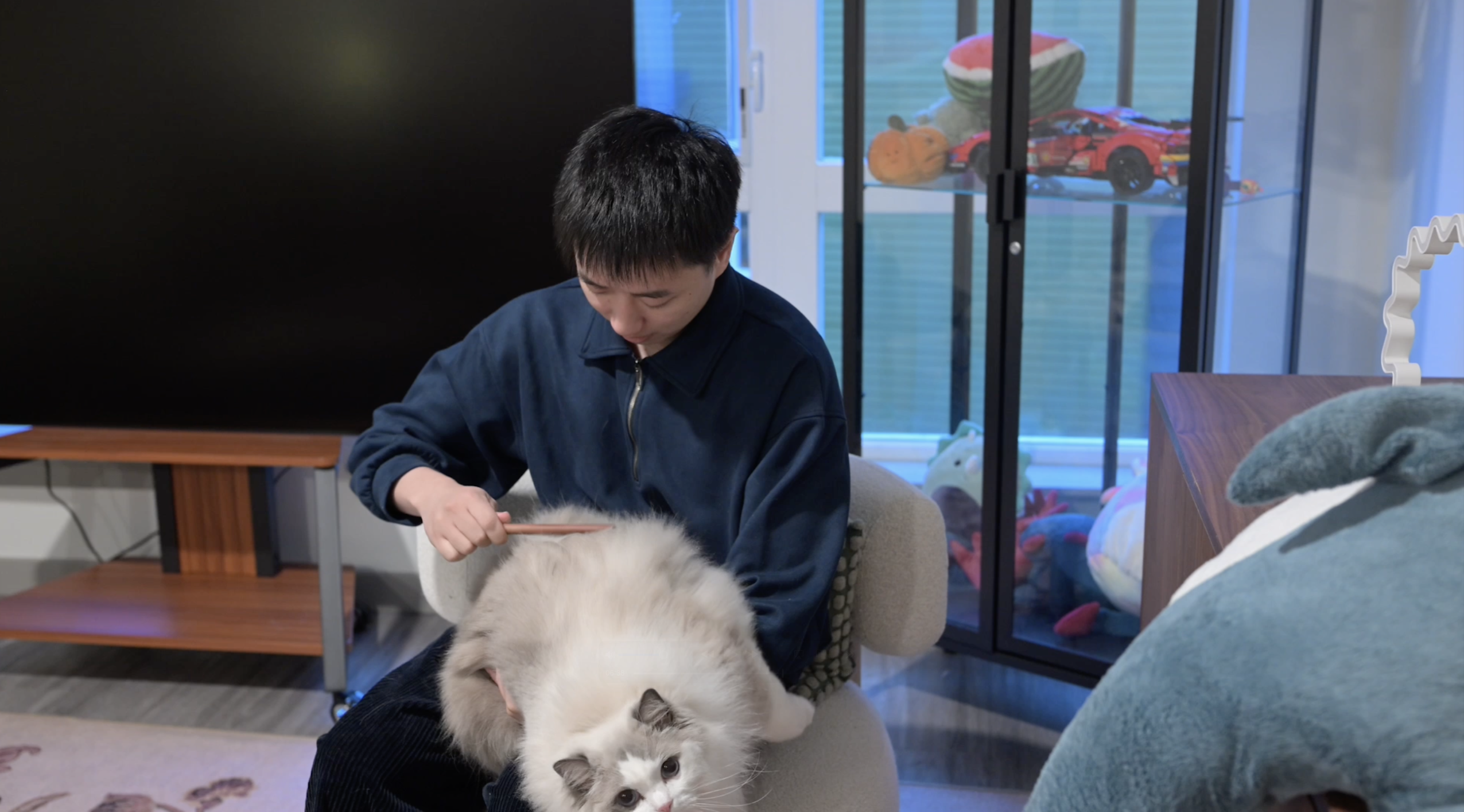
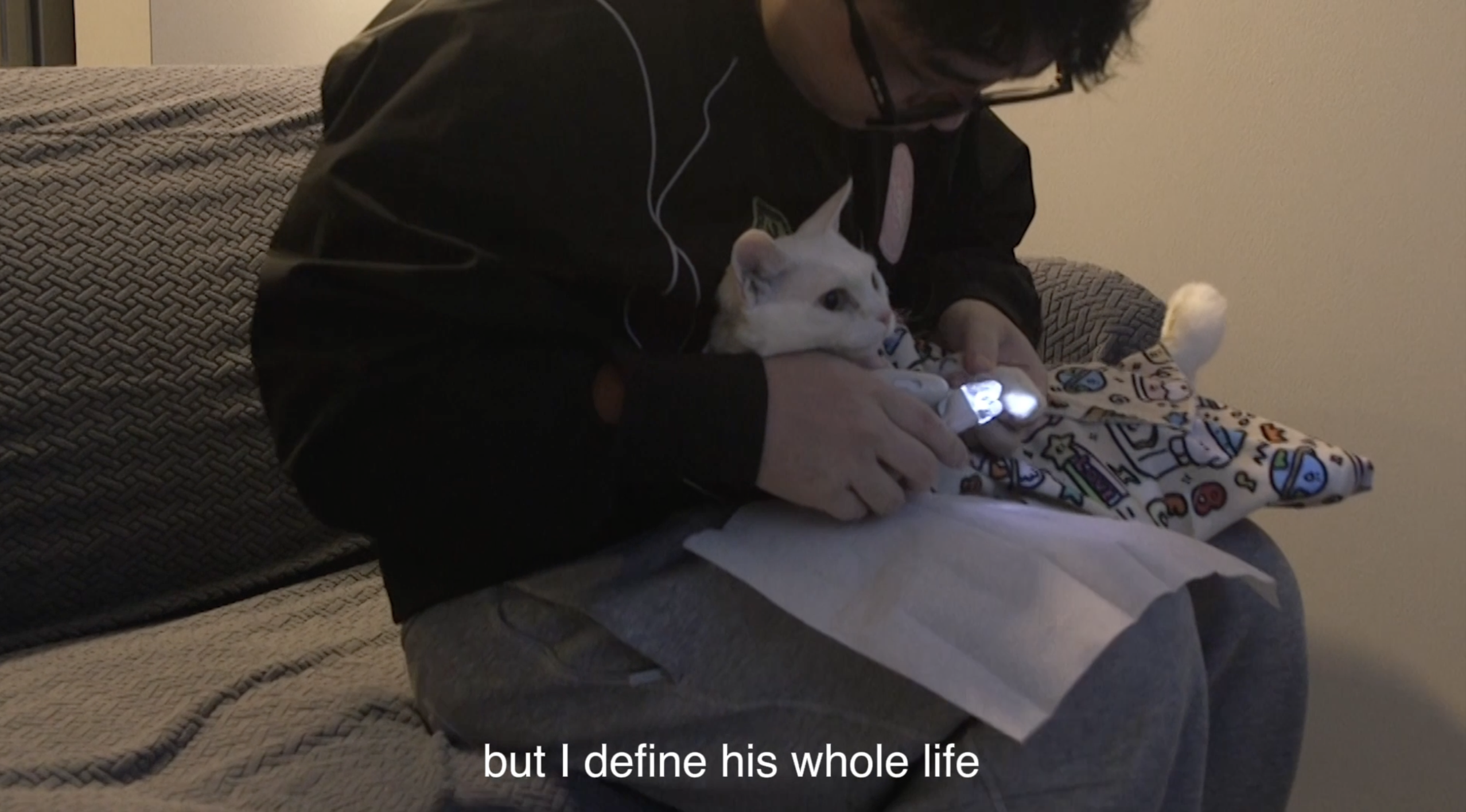
The project initially followed one person’s experience of living alone. During development, we discovered a second subject in a remarkably similar situation: both were male international students, lived alone, and shared their apartments with cats.
This shifted the film into a parallel portrait of Han & Godlike and Eddie & Yumi—two similar living situations that revealed different relationships with companionship and solitude.
Observing Intimacy
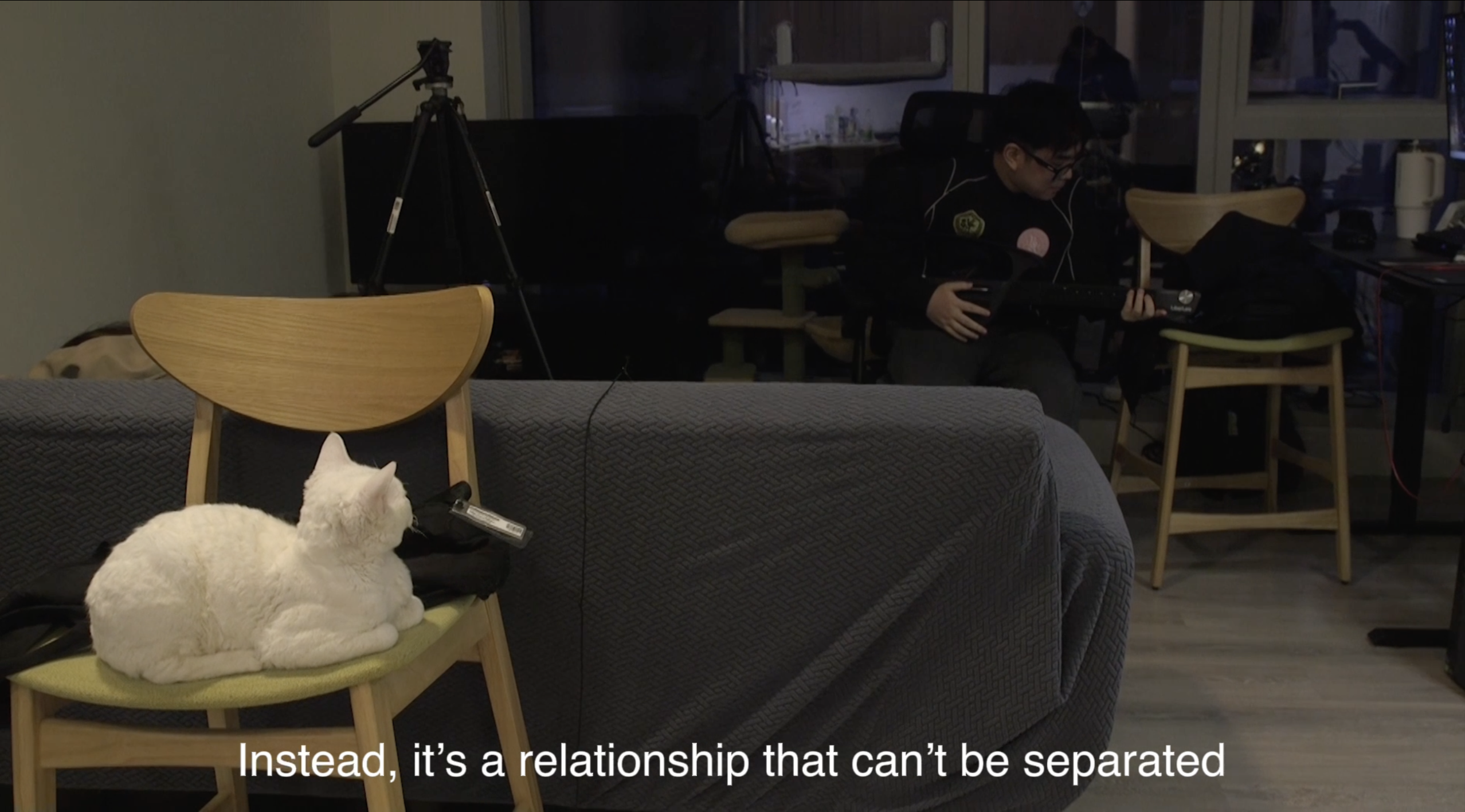
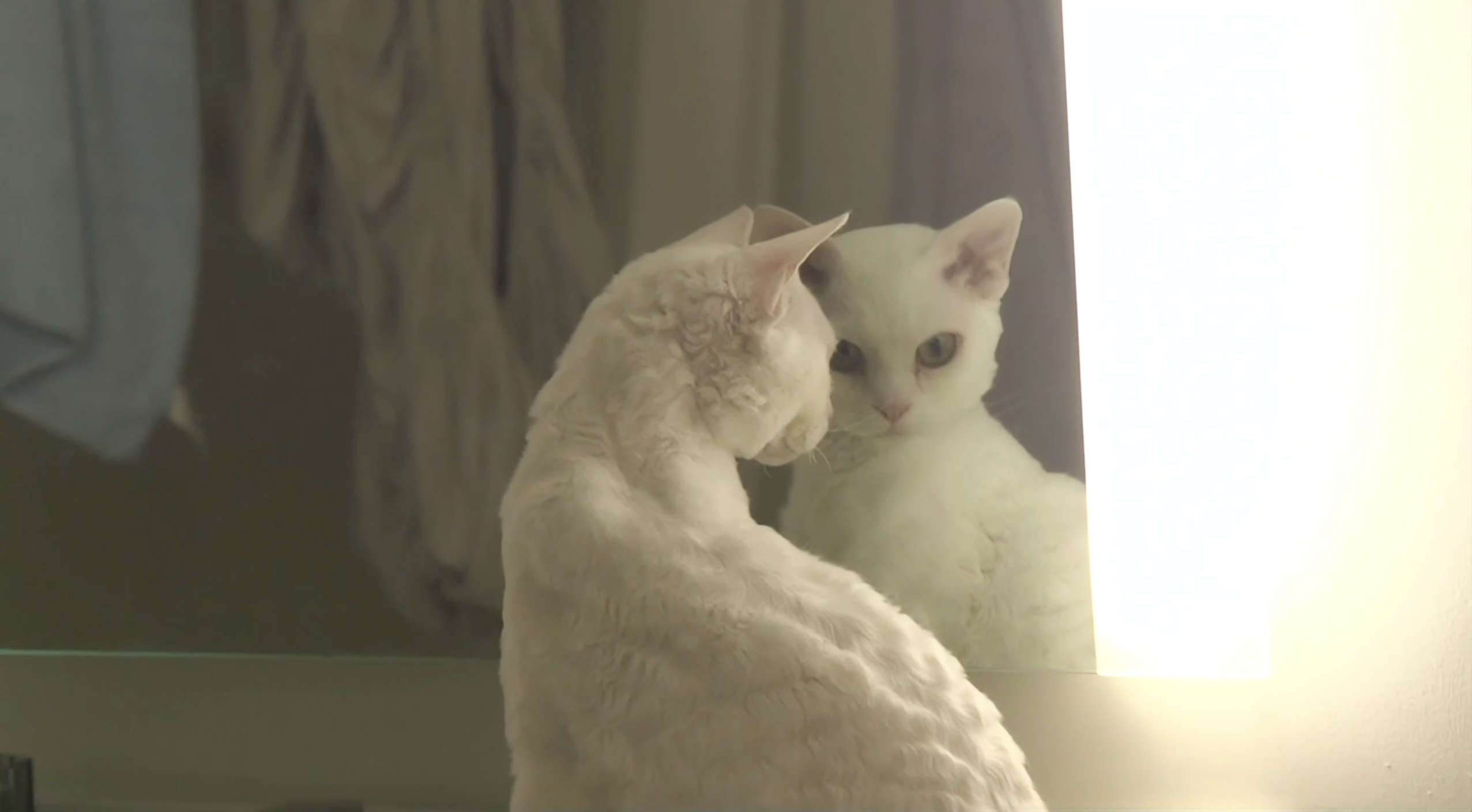
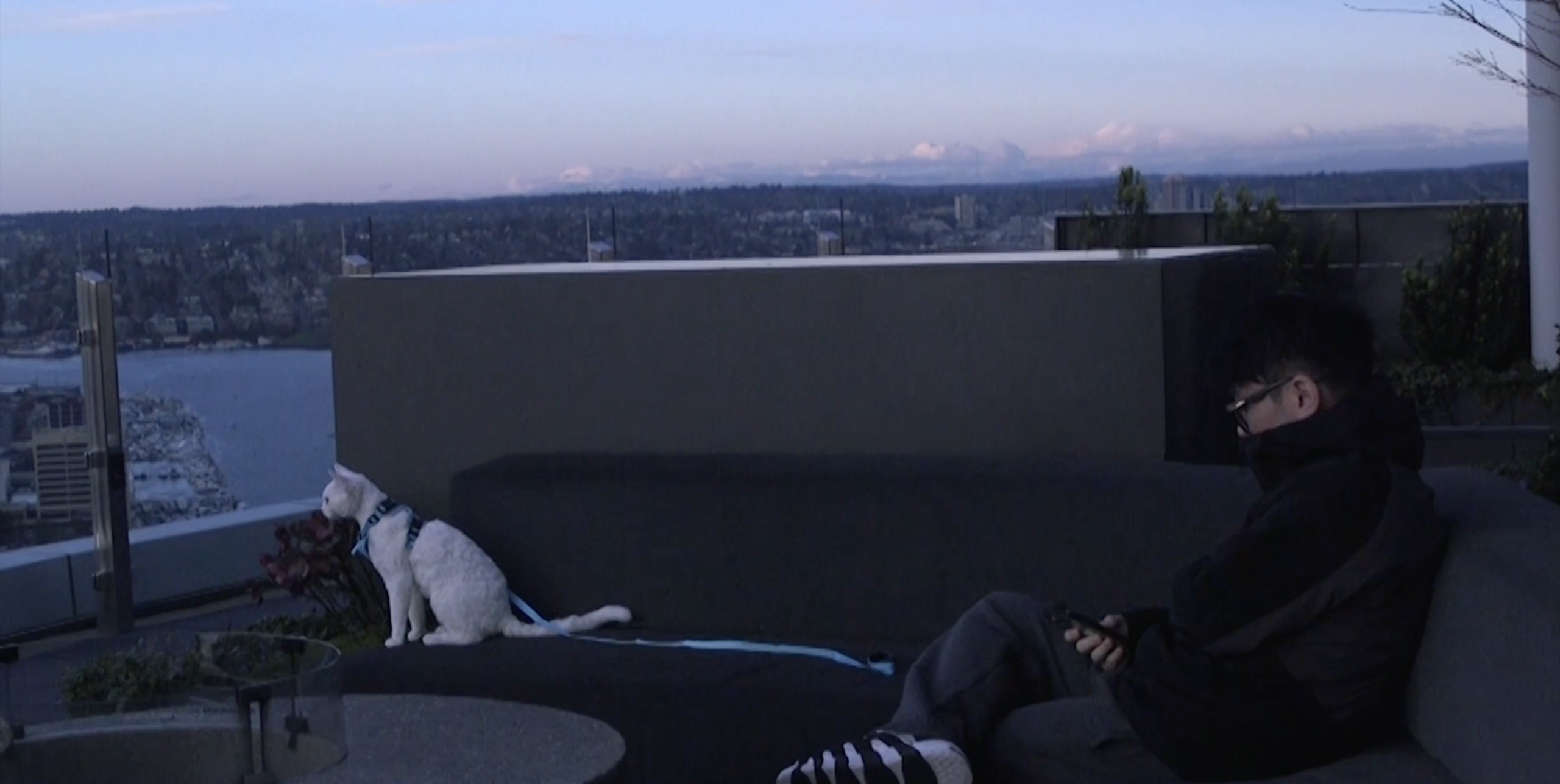
Drawing loosely from Sartre’s ideas of the gaze and the Other, we treated the cats not simply as pets, but as observers within the domestic space.
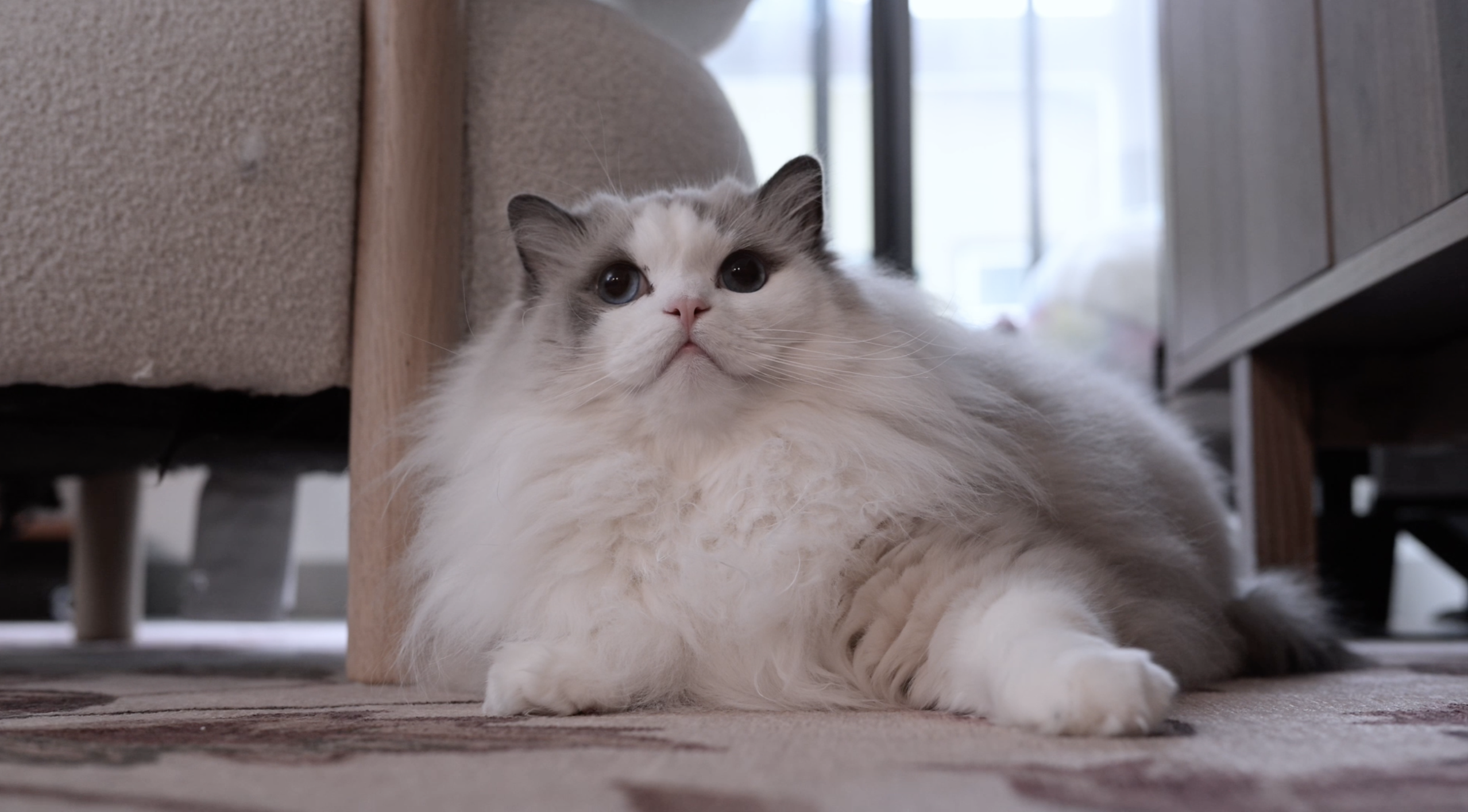
Low-angle perspectives, reflections, intimate close-ups, and distant apartment views created a visual tension between physical closeness and emotional isolation.
Across two to three days of principal photography, the project generated 140+ raw video files, allowing spontaneous behavior to shape the film beyond our original shot list.
Finding the Contrast
I designed the interviews to move from everyday routines toward questions of loneliness, dependence, boundaries, and mutual understanding.
We then used AI to compare the two transcripts and surface recurring themes and contradictions. These findings became a reference for building a cross-cut structure in which two separate interviews could respond to each other.
Who is really observing whom?
Who needs whom more?
Do you shape your cat’s life—or does its presence shape yours?
Editing for Clarity
01 — Rough Cut
Our first edit relied heavily on fast cross-cutting between the two subjects. The contrasts were clear to us, but first-time viewers struggled to identify who was speaking and which cat belonged to whom.
02 — Feedback
We realized the problem was not simply pacing—it was orientation. We were asking viewers to compare two perspectives before giving them enough information to understand who those perspectives belonged to.
03 — Revision
Across several iterations, we introduced selected interview footage to establish a clearer relationship between face → voice → cat → perspective before returning to faster cross-cutting.
Clarity had to come before complexity.
My Role
I served as the project’s primary cinematographer and designed the interview questions. Each team member initially edited one section of the film; I then assembled the three sections into the complete documentary and led the final revisions and editorial decisions.
Final Film
Alone While Not Alone
Outcome
The film received a strong response during its class screening. Several classmates asked for the link to watch it again, and our instructor recommended the project for a university student-work showcase/selection.